

Art Therapy Brisbane
A creative, non-verbal way to explore and process experiences — no artistic skill needed.
Art therapy uses creative processes within a supportive therapeutic relationship to help you express and make sense of feelings and experiences that can be hard to put into words.
What is art therapy
Art therapy (also called art psychotherapy) combines creative processes — such as drawing, painting, collage and working with other materials — with the support of a trained therapist. It offers a way to explore and process thoughts, feelings and experiences that can be difficult to reach through conversation alone.
You do not need any artistic skill or experience to take part. The focus is not on producing a finished artwork, but on what the creative process opens up and how your therapist supports you to understand it. Art therapy can suit both adults and children, and can be especially helpful for people who find talk-based therapy challenging.
Jannie also offers individual counselling and family therapy. Click here to learn more: Individual Counselling
How can art therapy help me?
A different way in, when words are hard to find.
Art therapy is generally used as one part of a broader, individualised approach, rather than as a stand-alone treatment. It is often offered alongside talk-based therapies such as acceptance and commitment therapy, DBT, and within trauma-focused and mindfulness-based care. Because it offers a non-verbal way in — a way to express and explore what is hard to put into words — it can be a valuable part of support for people experiencing a range of difficulties.
Some of the ways art therapy can form part of treatment include:
Anxiety
The focused, tactile nature of art-making can be grounding, and can offer a way to give form to worries that are difficult to articulate. It can provide a contained space to notice and explore anxious feelings.Post-traumatic stress (PTSD)
Traumatic experiences can be hard to reach through words alone. As part of trauma-focused care, art therapy offers a non-verbal way to approach and process difficult memories at a manageable pace, without needing to narrate them aloud. You can read more on our trauma therapy page.Depression and low mood
When motivation and words feel out of reach, art therapy can offer a gentle, low-pressure way to engage, to express heavy or difficult feelings, and to experience small moments of focus and accomplishment.Prolonged and complicated grief
Art therapy can provide a way to process loss and the complex, sometimes contradictory feelings that come with it, and to hold and give form to memories of what, or who, has been lost.Adjustment difficulties
When adapting to a significant life change or stressful event feels overwhelming, art therapy can support you to make sense of the transition, and to explore the feelings and shifts in identity that can come with it.Autistic children and adults
For autistic people, art therapy can offer a sensory-aware, non-verbal way to communicate, express and process experiences, supported at each person's own pace. It is not about changing who someone is, but about offering another way to be understood and to explore their inner world.
Some experiences and feelings are difficult to name or talk about directly. Art therapy offers another way in — using image-making and materials to give form to what is going on inside, at a pace that feels manageable.
In a session, your therapist provides a calm, supportive space and a range of materials to work with. There is no pressure to create anything in particular. Together you notice and reflect on what emerges, using the creative process to explore feelings, experiences and patterns in a contained way.
Whether you find words difficult, feel stuck in talk-based therapy, or simply want a different way to explore what you are experiencing, art therapy can be tailored to you.
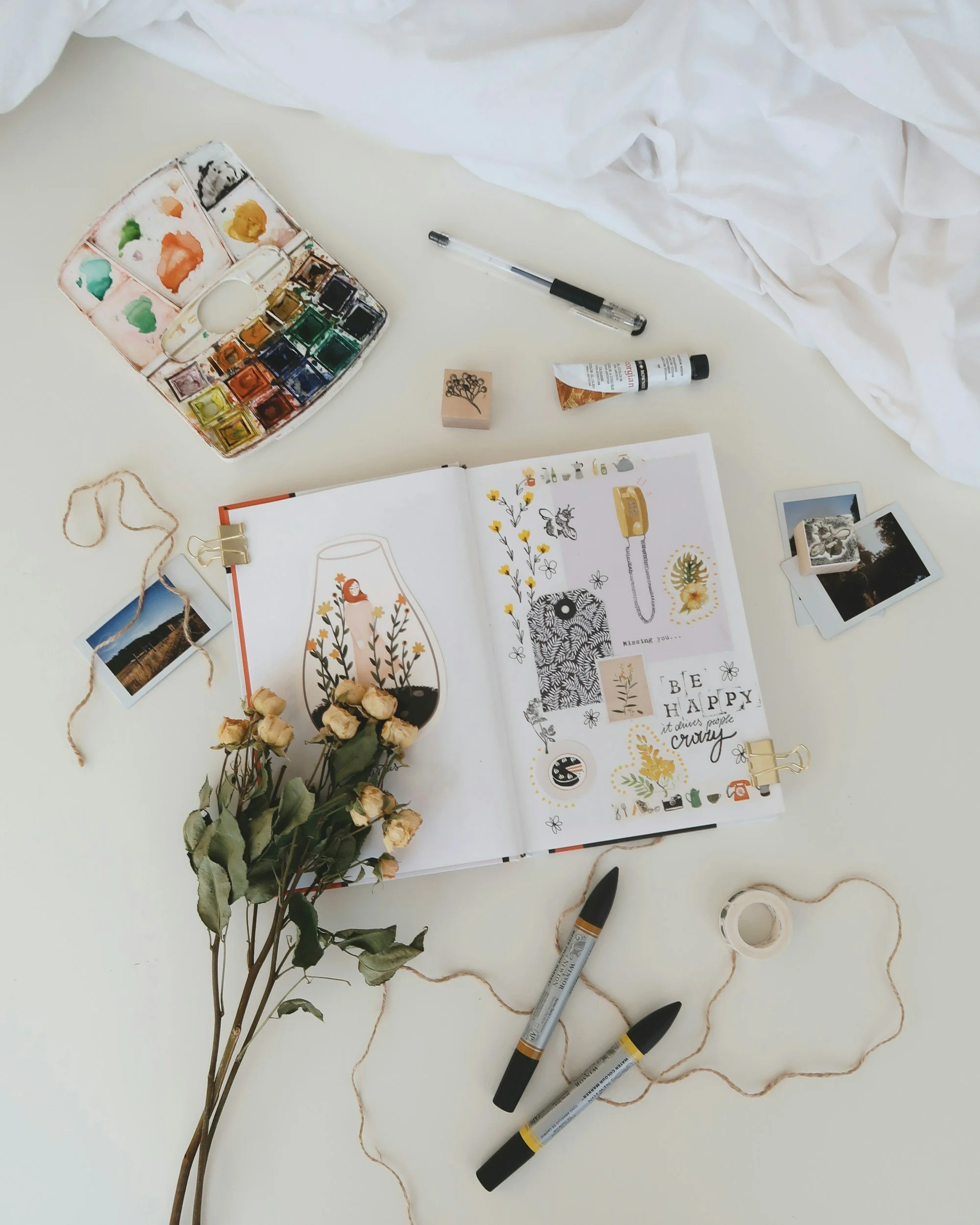

A gentle, creative approach that meets you where you are.
Whether you find words difficult, feel stuck in talk-based therapy, or simply want a different way to explore what you are experiencing, art therapy can be tailored to you.
Who is art therapy for?
Art therapy may suit adults, teens and children (with Parents in the session) including those who find talk-based therapy difficult.
Art therapy may be helpful for:
People who find words hard to find
Where talk-based therapy feels difficult, art therapy offers a non-verbal way to express and process experiences.Autistic adults
Art therapy can offer a sensory-aware, non-verbal way to communicate and process experiences, adapted to each person's needs and pace.Teens for whom creativity is a strength or talking is difficult
Creative play and image-making can be a natural and accessible way for younger people to express themselves.People navigating difficult experiences or emotions
Including stress, life transitions, grief, or the effects of difficult experiences.Anyone wanting a different approach
Art therapy can complement, or offer an alternative to, conversation-based therapy.
Every person is different. A qualified art therapist can talk through your situation with you and discuss whether art therapy is a suitable fit.
What can art therapy help with?
Exploring, expressing and understanding — in your own way.
Depending on your goals, art therapy may support you to:
Improving mental health and wellbeing
Using creative processes to develop strategies to cope and heal from anxiety, depression, grief and challenging experiences.Express what is hard to put into words
Using creative processes to give form to and explore feelings and experiences.Process difficult experiences
Working through experiences and emotions at a manageable pace, with support.Build self-understanding
Noticing patterns, thoughts and feelings through the creative work.Find grounding and calm
Engaging in a creative process that can be settling and regulating.
Outcomes vary from person to person, and art therapy is not suitable or recommended for everyone. What the work looks like is always shaped around you.
Meet your Art Therapist- Jannie Olsen
We are excited to introduce ourselves and put faces to names. Please get in touch if you have any questions or would like to speak to any of us about therapy or referrals.

Hi, I’m Jannie,
I’m an Accredited Mental Health Social Worker, Family Therapist and Art Psychotherapist. I work with children, adolescents, adults, and families to navigate challenges such as trauma, grief, parenting stress, navigating new diagnoses and emotional or behavioural difficulties.
Meet Jannie Olsen, Art Psychotherapist, Family Therapist and Mental Health Social Worker
Are you ready to feel seen, heard and supported?
We’re here to hold hope when you can’t hold it yourself.
Not sure which therapy is right for you - no worries! Our team is here to support you, from identifying what support you need to getting your appointments organised.
Our clinics are conveniently located in Auchenflower and Upper Mount Gravatt.
Can’t make it into the clinic?
We’ve got you covered with telehealth support. Want to meet somewhere else more comfortable? We’re more than happy to meet you there too!
37 Bangalla St,
Auchenflower 4066

21 Mount Gravatt-Capalaba Rd, Mount Gravatt 4122
0475 041 910


info@therapywell.com.au